Baby Footprint Embroidery
A Designer’s First Stitch: Warmth, Simplicity, and Quiet Sentiment
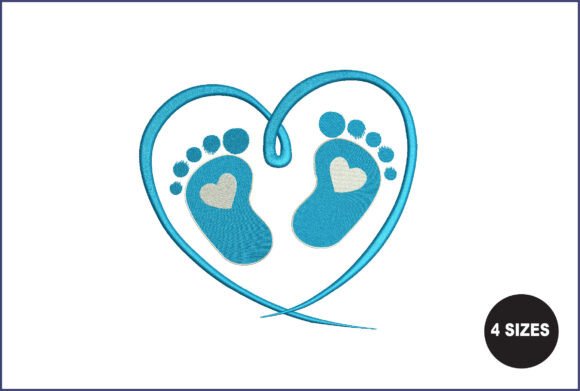
As an embroidery designer who’s tested over 3,000 machine embroidery designs for retail and custom gift shops, I approached Baby Footprint Embroidery with quiet anticipation—not for flash or complexity, but for sincerity. What landed first wasn’t technical precision, but mood: soft, tender, unhurried. It feels handmade—not in the sense of being imperfect, but in its gentle curves, subtle tapering toes, and organic line weight. There’s no cartoonish exaggeration or stiff symmetry. Instead, it carries a classic, time-softened charm—neither overly modern nor vintage-revival, but quietly enduring. For customers seeking emotional resonance over trendiness, this design lands like a whispered “welcome.” It reads as sweet without saccharine, elegant without formality, and personal without needing names or dates.
Where This Design Truly Shines: From Nursery to Keepsake
Baby Footprint Embroidery is remarkably versatile across personalized gift categories—especially when authenticity and heirloom potential matter. On a folded cotton blanket? It becomes a tactile memory anchor—gentle under tiny fingers, meaningful for parents years later. On a linen kitchen towel? It transforms utilitarian cloth into a cherished wedding gift—think “First Home, First Steps” stitched beside monogrammed initials. As a pillow cover for a nursery? Its scale and simplicity hold up beautifully at arm’s length and in product photography. And for Etsy sellers or small shop owners offering custom orders, it’s ideal for preview mockups: clean lines reproduce well in digital embroidery file previews, printable mockups, and even embroidered towel flat-lays.
It also bridges baby and milestone gifting seamlessly. A new dad might order it on a canvas tote bag for diaper changes; a grandmother may choose it for a quilt square alongside hand-stitched initials. In wedding gift contexts—especially for couples expecting or newly parenting—it adds layered meaning: not just “congrats,” but “we’re honoring your beginning.” For boys-focused collections, it avoids gendered clichés (no trucks or lions), letting the footprint itself speak universally—soft, human, full of promise.
Thoughtful Placement Matters: Know Your Fabric & Function
While Baby Footprint Embroidery is forgiving in spirit, its delicate contour demands mindful execution. Avoid placing it where fine detail risks distortion: on highly textured fabric like terry cloth towels (unless using a light-density version), stretchy knits like newborn onesies (stabilizer choice is critical), or curved surfaces like structured hat brims. Small lettering isn’t part of this design—but if you’re pairing it with a name or date, keep font size generous and test spacing.
Dark fabrics require special attention: stitch density affects visibility more than boldness. On charcoal or navy, lighter thread colors (ecru, pale gray, soft mint) often read more clearly—and more softly—than stark white. Conversely, on ivory linens or oatmeal cotton, deeper tones like slate or cocoa add warmth without heaviness. Always confirm hoop size compatibility before digitizing for production; mismatched hoops cause misalignment that breaks the design’s quiet harmony.
Why Customers Trust This Design—Before They Even See the Finished Product
Gift buyers don’t just purchase stitches—they buy intention. Baby Footprint Embroidery signals care through restraint. Its lack of clutter tells shoppers: *This wasn’t rushed. This was chosen.* That perception lifts perceived value instantly—especially for handmade products priced above mass-market alternatives. When photographed on a folded blanket or draped over a wooden bassinet, it invites emotional connection faster than text-heavy designs. Buyers linger longer. They imagine gifting it. They picture the unboxing moment. That engagement translates directly to conversion for Etsy sellers and boutique owners.
For craft fair vendors, it’s a conversation starter: “Is that a real footprint?” “No—designed to feel like one.” That moment builds trust. For wedding gift designers, it offers subtle storytelling—no explanation needed, just resonance. And for digital embroidery file sellers, its clean aesthetic encourages repeat use across seasons and customer segments, making it a reliable small shop product.
Practical Notes Every Embroiderer Should Run Before the First Customer Order
This isn’t just about prettiness—it’s about reliability. Before stitching your first Baby Footprint Embroidery for sale:
- Test on scrap fabric that matches your intended product—same weight, weave, and stretch.
- Check thread color contrast in natural light *and* under your shop’s display lighting.
- Review stitch density: high density adds durability but can stiffen lightweight fabrics; low density keeps drape but may fray with heavy washing.
- Use appropriate stabilizer: cutaway for knits, tear-away for stable wovens, and wash-away for delicate layers like voile overlays.
- Compare light/dark fabric mockups side-by-side—you’ll spot subtle tonal shifts invisible on screen.
- Inspect small details post-stitch: toe definition, smooth curves, and edge clarity are essential to the design’s quiet elegance.
- Confirm commercial licensing before selling finished products—this is non-negotiable for Etsy sellers, wholesale partners, and any business offering custom embroidery.
Remember: the description says it’s “suitable for decorating baby accessories like bibs, hats, blankets, and diaper bags”—but suitability depends on your process, not just the file. If hoop size, file format, or license terms aren’t clearly stated by the source, reach out before investing time or inventory.
Final Thought: More Than a Design—A Quiet Invitation
Baby Footprint Embroidery doesn’t shout. It waits. It invites touch, reflection, and tenderness. For embroidery makers building brands rooted in meaning—not just motifs—it’s a quiet powerhouse. Whether you’re stitching for a first-time parent, a wedding registry, or a keepsake box marked “2025,” this design carries weight without burden. It reminds us that the most memorable personalized gifts aren’t the loudest—they’re the ones that feel like they already belong.