Deer Embroidery Design
A Quiet, Confident Presence—Not Just Another Wildlife Motif
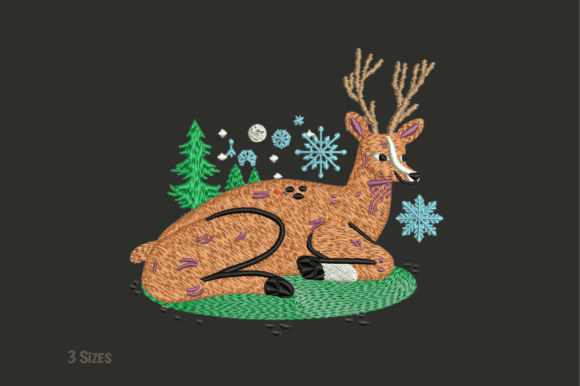
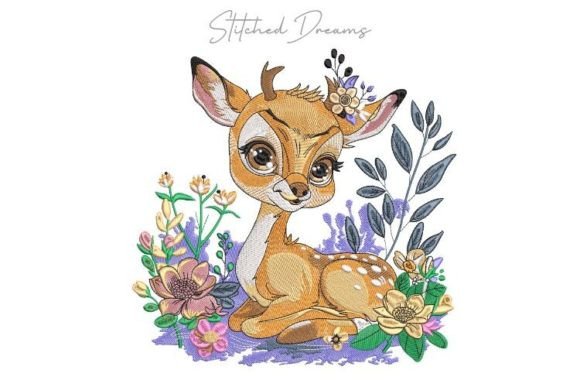
First impression? This Deer Embroidery Design doesn’t shout. It breathes. There’s a grounded stillness in the pose—head slightly lowered, ears alert but relaxed—that reads as thoughtful rather than timid. The line work feels intentional: clean contours with subtle tapering on antlers and leg joints, not stiff or overly symmetrical. That matters. In real-world embroidery, symmetry can read as sterile; this version keeps warmth. As a designer who’s stitched hundreds of animal motifs for boutique apparel and nursery collections, I immediately saw where it lands: not as a cartoon, not as a silhouette—but as a quiet signature piece.
Where It Lives Best—Real Projects, Real Reactions
Last week, I prepped a custom order: an organic cotton tote bag for a local herbalist’s pop-up shop. She wanted “something forest-adjacent, but not cliché.” I pulled up Deer Embroidery Design—and it clicked. Stitched at 4.2" wide on the front pocket, it held its shape without overwhelming the fabric. Customers paused. Not just glanced—*paused*. One asked if it was hand-drawn first (it wasn’t, but the flow suggested it). That’s the quiet value: it reads handmade, even when machine-stitched.
It shines on medium-weight fabrics—cotton twill aprons, loopback sweatshirt backs, linen pillow covers. On a baby onesie? Yes—but only centered high on the chest, sized down to ~3". The neck curve gives it room to breathe, and the gentle posture avoids looking top-heavy. For holiday embroidery, I’ve used it on tea towels with a single sprig of eucalyptus beside it—no text needed. The design carries the season’s hush on its own.
Where to Proceed Thoughtfully
- Small hoop sizes: Below 3.5", antler tips and eye detail soften. Test stitch density—tight fill areas near the shoulder may blur if shrunk too far.
- Textured or stretchy fabric: On terry cloth towels or ribbed knit caps, use cutaway + tear-away stabilizer combo. The design’s moderate stitch density holds up, but those delicate ear edges need support.
- Dark or black fabric: Avoid light thread unless you’re aiming for subtle tone-on-tone. A deep olive or charcoal gray thread reads richer and more dimensional than white here.
- Curved surfaces: Caps work—but place it low on the front panel, not over the crown. The antler sweep flows better with the hat’s natural arc than against it.
- Frequent-wash items: Baby blankets or kitchen towels? Confirm your satin stitch segments (like inner ear or eye highlight) aren’t over-digitized. They should lie flat—not puff or snag after five washes.
What It Adds—Beyond the Stitch
This isn’t just decoration. It elevates perceived value. A plain sweatshirt becomes “the one with the calm deer”—a detail people remember. For Etsy sellers, that translates to fewer returns and more repeat buyers asking, “Do you have another woodland animal?” (Hint: yes—this fits neatly into a Woodland Animals series.)
Customer trust builds quietly: the balance of negative space, the absence of jagged transitions between fill and satin stitch, the way the neck flows into the chest—it all signals care. No rushed digitizing. That professionalism shows up in photos, mockups, and in-hand product reviews. And for craft fairs? It’s gift-ready. No explanation needed. Just a soft, resonant “oh—I love that.”
Practical Designer Notes—Before You Load the Hoop
- Test stitch on scrap fabric *first*—especially if using textured weaves or blends. Watch how the antler tips land.
- Check thread color contrast across three backgrounds: light natural cotton, mid-tone oatmeal linen, and dark heather grey fleece.
- Review stitch density visually—not just in software. Dense fill near the shoulder shouldn’t crowd the leg line.
- Confirm hoop size compatibility. If your machine maxes out at 4x4, this design likely fits—but verify spacing around the outer edge.
- Inspect small details: the eye is minimal but legible. If stitching on sheer or lightweight baby fabric, consider reinforcing with a tiny running stitch outline.
- Test in black-and-white mockups. Does the silhouette hold weight? Does it scale cleanly for a patch or iron-on applique design?
- Use proper stabilizer—medium cutaway for knits, tear-away for stable wovens. Skip the cheap mesh; this design deserves clean backing.
- Verify licensing before listing finished products or digital embroidery files. Commercial embroidery rights aren’t implied—check before scaling your craft business.
Final Thought: A Design That Serves the Maker and the Moment
Deer Embroidery Design works because it respects both the craft and the customer. It doesn’t demand attention—it earns it. Whether you’re stitching a personalized gift for a new parent, building a cohesive line of embroidered tote bag designs, or sourcing reliable embroidery file assets for your digital shop, this motif delivers consistency without repetition. It’s versatile enough for sweatshirt embroidery and refined enough for nursery decor. It’s not flashy—but then, the best woodland moments rarely are. They’re still. Clear. True. And this design, stitched right, carries that same quiet authority.