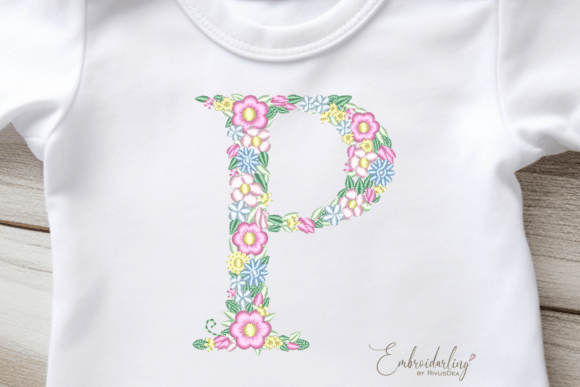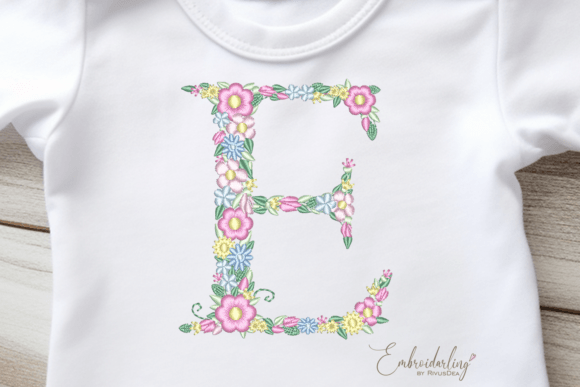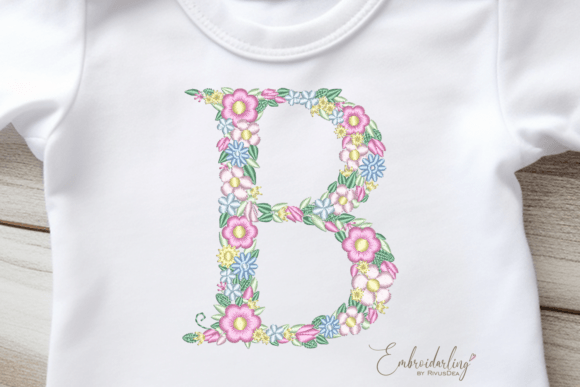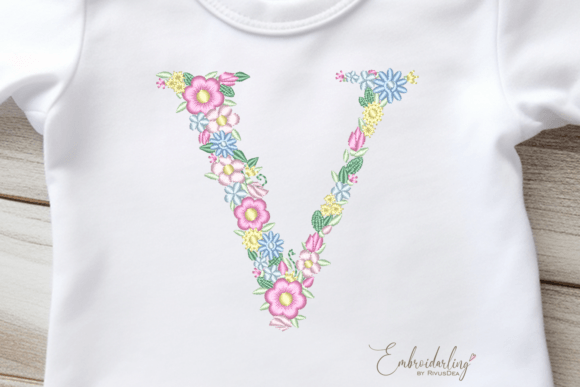
Floral Letter V Machine Embroidery
A Designer’s Real-World Review for Small Business Merchandise
As an embroidery designer who’s developed and tested hundreds of machine embroidery designs for small businesses—from neighborhood bakeries to indie florists and handmade studios—I approached the Floral Letter V Machine Embroidery with a very specific question: Does this design translate beyond decoration into authentic brand utility? The answer is yes—but with thoughtful application. At first glance, the title and description—“Elevate your stitching projects with the exquisite beauty… a captivating creation that combines the elegance of flor”—signal a design rooted in soft sophistication. It reads as elegant, handmade, and timeless, not flashy or trend-driven. That’s ideal for brands leaning into craftsmanship, care, and quiet confidence—think a local apothecary, a wedding-focused boutique, or a ceramicist whose logo centers on a monogrammed initial.
Where Floral Letter V Machine Embroidery Shines in Commercial Use
This design excels where subtlety and signature identity intersect. As an embroidered patch, it holds exceptional presence on denim jackets, canvas tote bags, and linen aprons—especially when stitched with matte cotton or rayon thread that enhances its organic flow. For cafés or florists, it works beautifully as a chest accent on staff uniforms or as a sleeve detail on work shirts: small enough to feel intentional, detailed enough to invite closer look. On caps, it performs best on structured front panels (not curved visors) where the floral curves retain clarity without distortion. As a tote bag design, it adds artisanal weight without overwhelming—ideal for branded customer gifts or event merch where you want recognition without shouting.
For Etsy sellers and handmade product creators, the Floral Letter V Machine Embroidery supports visual consistency across touchpoints: stitch it onto packaging tags, line the inside of gift boxes, or embroider it onto reusable produce bags. Its Wedding Monogram roots mean it carries inherent emotional resonance—making it especially effective for bridal studios, vow renewal planners, or calligraphers launching custom apparel lines. As part of a broader set of design assets, it pairs seamlessly with minimalist typography or botanical line art, helping unify a brand’s brand identity across digital mockups and physical goods.
Critical Considerations Before Production
Not every surface welcomes delicate florals equally. Here’s where caution—and testing—is non-negotiable:
- Small patch sizes (under 2.5” wide): Fine stems and petal outlines may blur or vanish. Always test the machine embroidery design at your target size before bulk production.
- Cap fronts and curved surfaces: The letterform’s vertical balance can shift under tension. Run a physical test on your exact cap style—not just a flat hoop simulation.
- Dark or textured fabric: High stitch density in floral elements risks sinking into heavy twill or fleece. Use cutaway stabilizer + floating to maintain definition.
- Frequent washing: Dense fill areas need secure underlay and tight satin borders. Confirm thread colorfastness—especially with pastel greens or blush pinks common in floral palettes.
- Tiny lettering integration: If pairing the V with a name or tagline, verify spacing between elements. Crowding kills legibility and increases thread breaks.
How It Shapes Perception—and Drives Value
Embroidery isn’t just decoration—it’s tactile trust. When customers see the Floral Letter V Machine Embroidery on an apron or tote, they read intentionality, attention to detail, and pride in origin. That directly lifts perceived value: a $28 linen tote feels premium with this embroidered patch; a $45 custom shirt gains heirloom energy. For small business merch, that perception translates to higher retention, stronger unboxing moments, and word-of-mouth credibility. Unlike printed logos, this digital embroidery file signals craft—not commodity. It tells your audience: We made this, thoughtfully, by hand—or with tools that honor that standard.
Visually, it reinforces warmth and approachability without sacrificing polish. That duality is rare—and valuable—for service-based brands (e.g., pet sitters, yoga studios, home organizers) who rely on emotional connection. And because it’s rooted in monogram tradition, it subtly invites personalization—making it a natural gateway to upsells like custom name patches or client-specific embroidery bundles.
Practical Designer Notes You Can’t Skip
Before sending the Floral Letter V Machine Embroidery to your commercial embroidery machine or client’s production team, run these checks:
- Test in black and white first—eliminates color bias and reveals structural clarity.
- Verify performance at your smallest intended use case (e.g., 1.75” patch). Does the stem hold? Do petals read as shape—not blob?
- Review thread color contrast against your base fabric. A pale gold V on oatmeal linen reads luxe; the same combo on charcoal may disappear.
- Inspect spacing between floral elements and the letterform’s negative space. Tight gaps = nesting issues on dense fabrics.
- Confirm hoop size compatibility—some floral monograms require larger hoops for smooth hooping and minimal re-hooping.
- Test on your actual fabric + stabilizer combo. A design that flows on cotton poplin may pucker on slubbed linen.
- Create a printable mockup for client approval—include scale reference, thread swatches, and placement notes.
- Compare it beside your other core design assets. Does it harmonize with your logotype, icon system, and packaging palette?
- Confirm commercial licensing applies—especially if selling finished goods (not just files). Never assume.
The Floral Letter V Machine Embroidery isn’t just another embroidery file. It’s a versatile, emotionally intelligent tool for small business owners building something meaningful—one stitch, one apron, one tote bag at a time. Used with intention, it strengthens brand identity, deepens customer connection, and elevates everyday items into memorable brand artifacts. Just remember: great custom apparel starts not with the design alone—but with how well it serves your story, your fabric, and your people.