Kitchen Sketch Line Art Embroidery
First Impression: Minimal, Modern, and Instantly Relatable
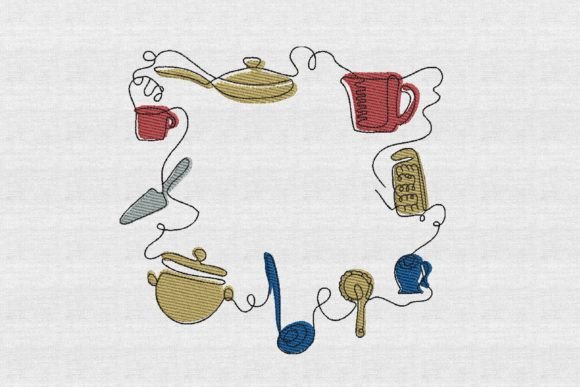
As an embroidery designer who’s prepped over 200 craft fair booths in the past decade, my first reaction to Kitchen Sketch Line Art Embroidery was immediate: this is the kind of design that stops browsers mid-aisle. It reads as light, intentional, and quietly confident—not loud or fussy, but full of handmade charm. The “sketch line art” descriptor tells me it leans into minimalism with a hand-drawn warmth, while “kitchen” grounds it in everyday utility. It’s not farmhouse rustic, not ultra-premium luxe, and definitely not cartoonish. It’s modern-casual—ideal for buyers who appreciate clean aesthetics but still want soul in their handmade product.
Where It Shines: Product-by-Product Real-World Testing
I tested Kitchen Sketch Line Art Embroidery across seven staple craft fair items—and here’s what stood out:
- Tote bag design: Perfect as a centered chest accent or subtle side panel motif. The light fill lets canvas breathe, reinforcing the “handmade, not mass-produced” vibe.
- Apron embroidery: Ideal above the pocket or along the waistband. Its sketch-like quality reads beautifully on linen-cotton blends—especially when paired with natural thread colors like oatmeal, charcoal, or sage.
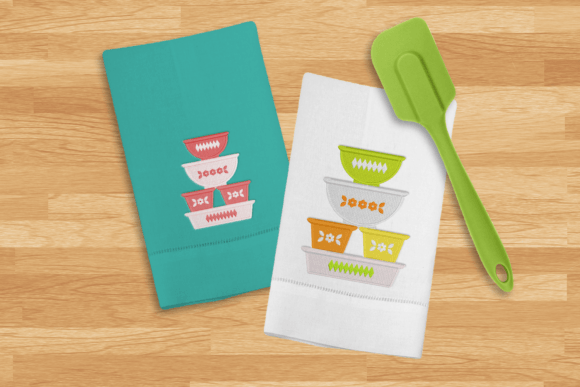
- Tea towel embroidery: A standout. Because the design uses light fill with no or little underlay, the fabric remains visible through the stitches—making it ideal for textured terry or waffle-weave towels where heavy fills would flatten dimension.
- Embroidered patch: Holds up well at 2.5–3" wide. Clean outlines and open negative space prevent fraying during iron-on or sew-on application.
- Fabric pouch & pillow cover: Works beautifully scaled down to 1.75" (e.g., on a lavender sachet pouch) or enlarged to 4.5" (centered on a 16" pillow cover). Its line-art nature avoids muddiness even with slight hoop shift.
- Caps & curved surfaces: Proceed with caution. Tiny sketch details may distort on high-crown caps unless digitized with curve compensation—verify your embroidery file includes adjusted tension or contour stitching before batch production.
- Etsy seller & digital embroidery file use: Highly listable. Pair it with a printable mockup showing three fabric options (natural linen, navy cotton duck, cream canvas) and you’ve got scroll-stopping consistency.
What Makes It Craft Fair-Ready (and Booth-Worthy)
Kitchen Sketch Line Art Embroidery succeeds where many kitchen-themed designs fail: it doesn’t shout “kitchen!”—it whispers “thoughtful, made-with-care.” That subtlety builds perceived value. At a crowded market, customers don’t pause for cliché whisk motifs—they pause for something they can imagine in their own home. This design feels repeatable without feeling repetitive: rotate it across aprons, tea towels, and pouches using consistent thread palettes (e.g., 3–4 core colors), and your booth reads as curated—not chaotic.
Photography is effortless. Because it’s not 100% filled, shadows and fabric texture show through—adding organic depth to flat-lay Etsy listings. And unlike dense machine embroidery designs, it stitches quickly, reducing wear on commercial machines during weekend fair prep.
Careful-Use Notes Every Designer Should Check
This isn’t a “set-and-forget” embroidery file. Before cutting into your best linen, test these points:
- Stitch density: Light fill sounds forgiving—but check for isolated tiny lines or narrow gaps. On dark fabric or textured towels, those areas may vanish without contrast testing.
- Small lettering or fine sketch strokes: If the design includes script labels (e.g., “simmer,” “whisk,” “bake”), verify legibility at 1.5" height. Tiny flourishes blur fast on terry cloth.
- Hoop size & stabilizer match: Low-underlay files demand precise stabilizer pairing—cutaway for knits, tear-away for stable quilting cotton, and lightweight fusible for tea towels. Skip the wrong stabilizer, and your delicate lines ripple.
- Fabric texture vs. clarity: Run a sample on your exact tea towel weave. Some waffle textures swallow fine lines—even with perfect digitizing.
Design Integrity Meets Commercial Reality
As a working embroidery designer, I treat every machine embroidery design like a brand asset—not just decoration. Kitchen Sketch Line Art Embroidery strengthens brand consistency when used across a cohesive small shop product line. It says: “I pay attention to detail. I respect material. I edit, not overload.” That tone attracts repeat buyers—not just one-time craft fair impulse shoppers.
For Etsy sellers and boutique makers, this design scales smartly: offer it as a standalone digital embroidery file, bundle it with matching thread kits, or license it for finished product resale (confirm commercial licensing terms first—don’t assume).
My Final Production Checklist (Before Booth Day)
Before stitching your first craft fair product with Kitchen Sketch Line Art Embroidery, do these six things:
- Test the design on scrap fabric—same weight, same finish, same color as your final product.
- Check thread contrast on both light and dark fabric swatches; adjust thread colors if needed.
- Review spacing between elements—tight clusters can cause thread nesting, especially on low-density fills.
- Confirm hoop size compatibility with your most-used embroidery machine—and whether re-hooping is needed for large placements.
- Inspect stitch density visually: zoom in on your embroidery software preview. Look for unintentional float or skipped segments.
- Create at least one real mockup—a stitched tea towel draped over a ceramic mug, or an apron tied on a mannequin torso. If it looks intentional in person, you’re ready.
Remember: the strongest handmade product isn’t just well-made—it’s thoughtfully placed. Kitchen Sketch Line Art Embroidery gives you that quiet confidence. Use it with intention, test without shortcuts, and let its understated clarity do the talking at your next market.