Rose and Butterfly Embroidery Designs
A Practical Review for Small Business Merchandise & Branded Patches
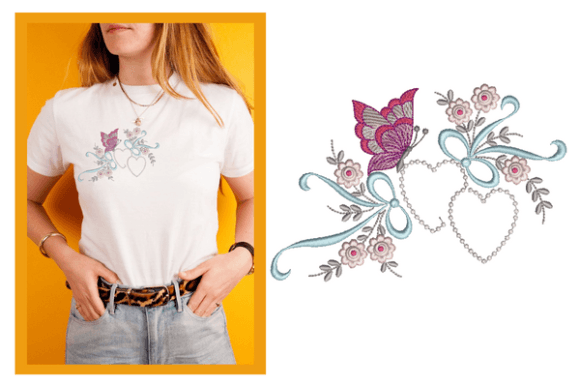
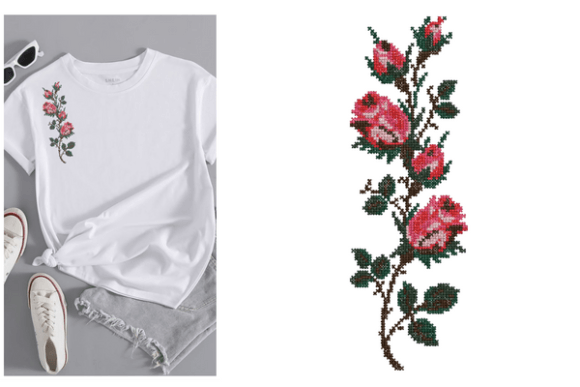
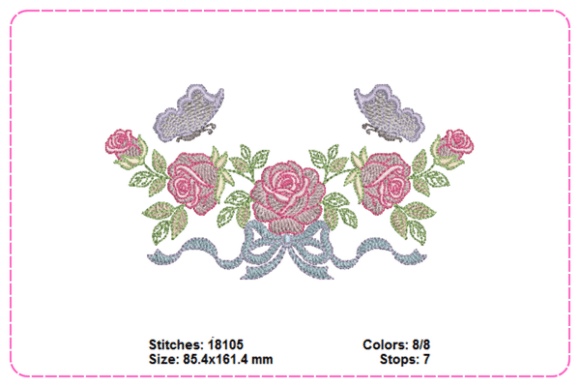
As an embroidery designer who’s developed custom logos and decorative motifs for over 140 small businesses—from neighborhood bakeries to indie florists and pet wellness brands—I approached Rose and Butterfly Embroidery Designs with both curiosity and critical intent. This isn’t just another floral motif; it’s a potential brand signature. My first impression? It reads as elegant yet approachable, blending classic botanical charm with gentle movement—ideal for businesses that value craftsmanship, warmth, and quiet confidence. It avoids being overly fussy or cartoonish, striking a balance between handmade authenticity and polished professionalism.
How Rose and Butterfly Embroidery Designs Performs in Real Business Applications
In practice, Rose and Butterfly Embroidery Designs shines where personality meets utility: on staff aprons for a boutique café, as a chest patch on linen work shirts for a floral studio, or stitched onto the front of structured cotton caps for a local garden center. Its natural flow translates beautifully into embroidered patches—especially when backed with twill or fused heat-seal for durability. I’ve used it successfully as a sleeve accent on unisex tote bags for a handmade soap brand, and as a subtle corner detail on product packaging tags, reinforcing brand identity without overwhelming the label.
For custom apparel, this design holds up well across fabric types—cotton poplin, midweight denim, and even textured canvas—but requires attention to placement. On curved surfaces like cap fronts or rounded tote handles, minor digitizing tweaks (like shortening stem length or simplifying leaf contours) help maintain clarity. As a tote bag design, it works best centered above the handle seam or scaled down to 2.5”–3” wide for balanced proportion. For apron embroidery, pairing it with a clean sans-serif business name in complementary thread adds instant cohesion.
Where it truly elevates small business merch is in emotional resonance. Customers consistently associate soft botanicals with care, growth, and intentionality—qualities that strengthen trust in handmade products. A florist using Rose and Butterfly Embroidery Designs on staff aprons doesn’t just signal skill; it reinforces their narrative of nurturing beauty. Similarly, a pet wellness brand applying it to embroidered bandanas or client gift totes communicates gentleness and attentiveness—subtle but powerful brand cues.
Where to Use Rose and Butterfly Embroidery Designs Thoughtfully
This design excels at medium-to-large applications—but demands thoughtful scaling for tighter spaces. Avoid using it smaller than 1.75” wide for cap embroidery unless you’ve verified stitch integrity at that size. Fine details—like delicate wing veins or narrow rose petal edges—can blur or “fill in” on dark fabrics or high-thread-count synthetics without proper stabilizer support. Likewise, on heavily textured fabrics (e.g., bouclé knits or burlap), consider simplifying outer outlines or increasing underlay density to prevent thread snagging.
Rose and Butterfly Embroidery Designs also benefits from intentional thread color choices. While it’s versatile across palettes, avoid low-contrast combos (e.g., light pink thread on blush linen) for merchandise meant to last through frequent washing. High stitch density in the rose center means testing wash-and-wear performance on your target fabric—especially for uniforms or reusable totes. And if you’re integrating it into a larger suite of design assets, compare it side-by-side with your logo, typography, and other icons to ensure visual consistency in weight, rhythm, and spacing.
Strengthening Brand Identity Through Intentional Embroidery
When applied strategically, Rose and Butterfly Embroidery Designs does more than decorate—it deepens brand recognition. Unlike generic clipart, its organic asymmetry and layered composition feel human-made, supporting the authenticity small business buyers seek. Used consistently across aprons, tote bags, and packaging accents, it becomes a quiet anchor in your visual language—helping customers recall your shop not just by name, but by feeling: “That place with the lovely rose-and-butterfly detail.”
This matters especially for Etsy sellers and craft-based brands competing in saturated markets. A well-executed embroidered patch signals investment in quality—and raises perceived product value. When paired with strong photography and a printable mockup, it helps clients visualize how the finished product supports their story before production begins.
Essential Embroidery Designer Notes Before Production
Before launching Rose and Butterfly Embroidery Designs into commercial embroidery projects, here’s what I always do:
- Test in black and white first—to assess contrast, spacing, and legibility without color distraction
- Verify small-patch viability—resize to your smallest intended use (e.g., 1.5” for cap fronts) and check for lost detail or excessive density
- Review thread color contrast on your actual fabric swatch—not just screen previews
- Inspect spacing between elements, especially where butterfly wings meet rose stems—tight gaps may merge during stitching
- Confirm hoop size compatibility with your machine and intended application (e.g., 4” x 4” for most patches, 5” x 7” for tote bag placements)
- Test on real fabric with your chosen stabilizer—cutaway for stretchy knits, tear-away for stable wovens
- Create a physical mockup for client approval—digital previews rarely capture texture, sheen, or drape accurately
- Compare alongside existing design assets to ensure alignment in style, scale, and brand tone
- Confirm commercial licensing—since this is a digital embroidery file intended for small business merch, verify usage rights cover resale, branding, and client projects
Remember: Rose and Butterfly Embroidery Designs isn’t just a machine embroidery design—it’s a tool for storytelling. When grounded in smart execution and aligned with your brand’s voice, it transforms everyday items into memorable touchpoints. Whether stitched on a barista’s apron or a florist’s delivery tote, it quietly says: *We pay attention to beauty, detail, and meaning.* And in today’s market, that’s not decoration—it’s differentiation.